Designing Trust into AI-Assisted Expert Work
Designing Trust into AI-Assisted Expert Work
Designing Trust into AI-Assisted Expert Work
Designing Trust into AI-Assisted Expert Work
Designing Trust into AI-Assisted Expert Work
Applying three trust principles across two AI-assisted products let experts move faster without ever losing control of the decision.
Applying three trust principles across two AI-assisted products let experts move faster without ever losing control of the decision.
"What happens when you hand a complex, high-stakes task to AI, and the person still has to trust the result?"
"What happens when you hand a complex, high-stakes task to AI, and the person still has to trust the result?"
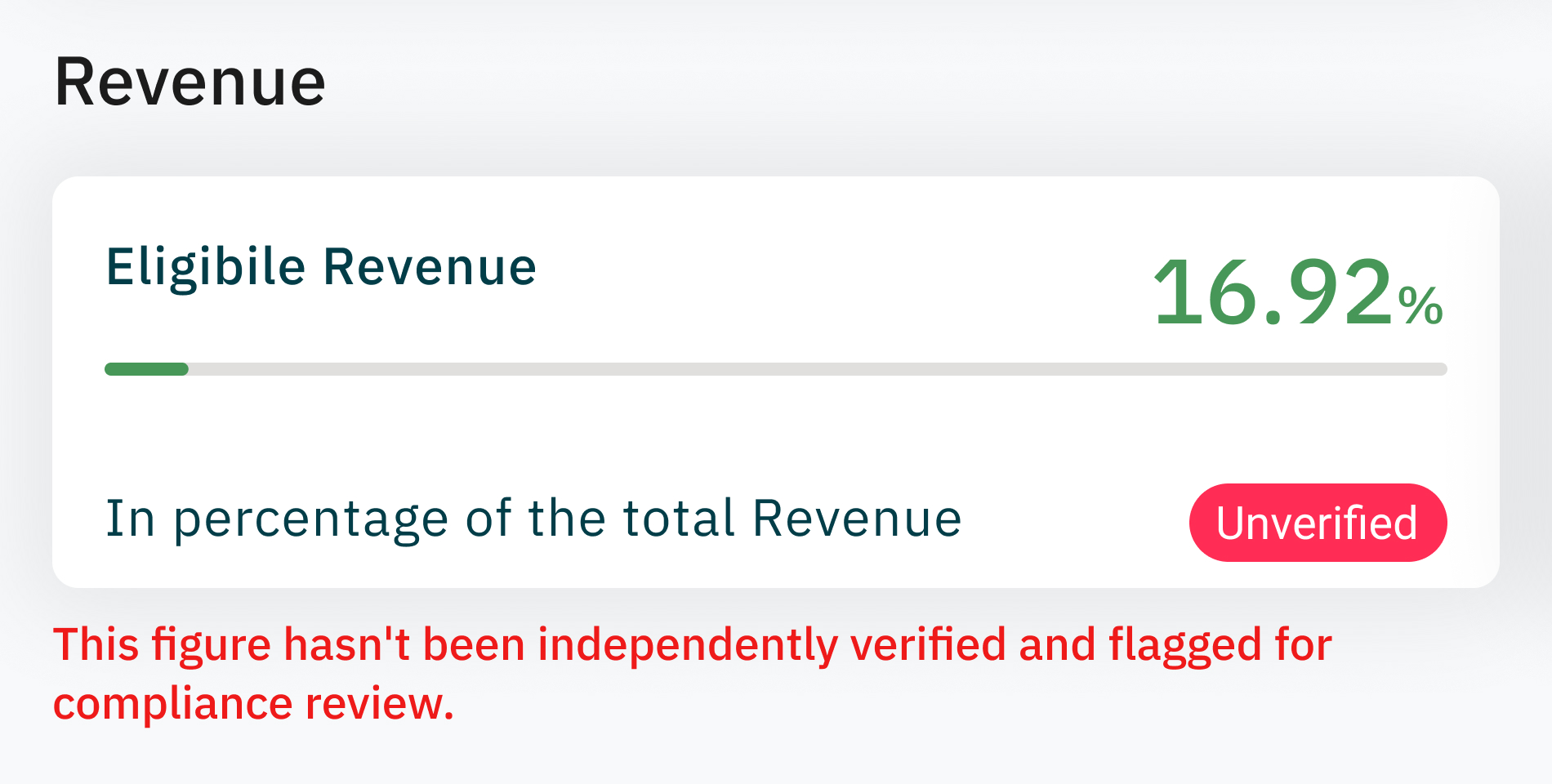
AI flags what it can't verify, instead of quietly presenting it as fact.
TL;DR
Two products I designed in unrelated domains, an ESG data platform for financial analysts and a wound-assessment tool for elderly clinicians, taught me the same thing about AI: neither user can tolerate it being confidently wrong. I designed against one rule: speed the expert up, without ever quietly taking the decision away from them.
Principles applied to trustworthy AI
Draft, don't decide

Show the seam

Fail loud, not silent
Project 1
Statsland AI-assisted data workflows
What I shipped
ESG data platform. On time, 20+ partners, 100+ companies, fewer errors.
How I reimagined it using AI
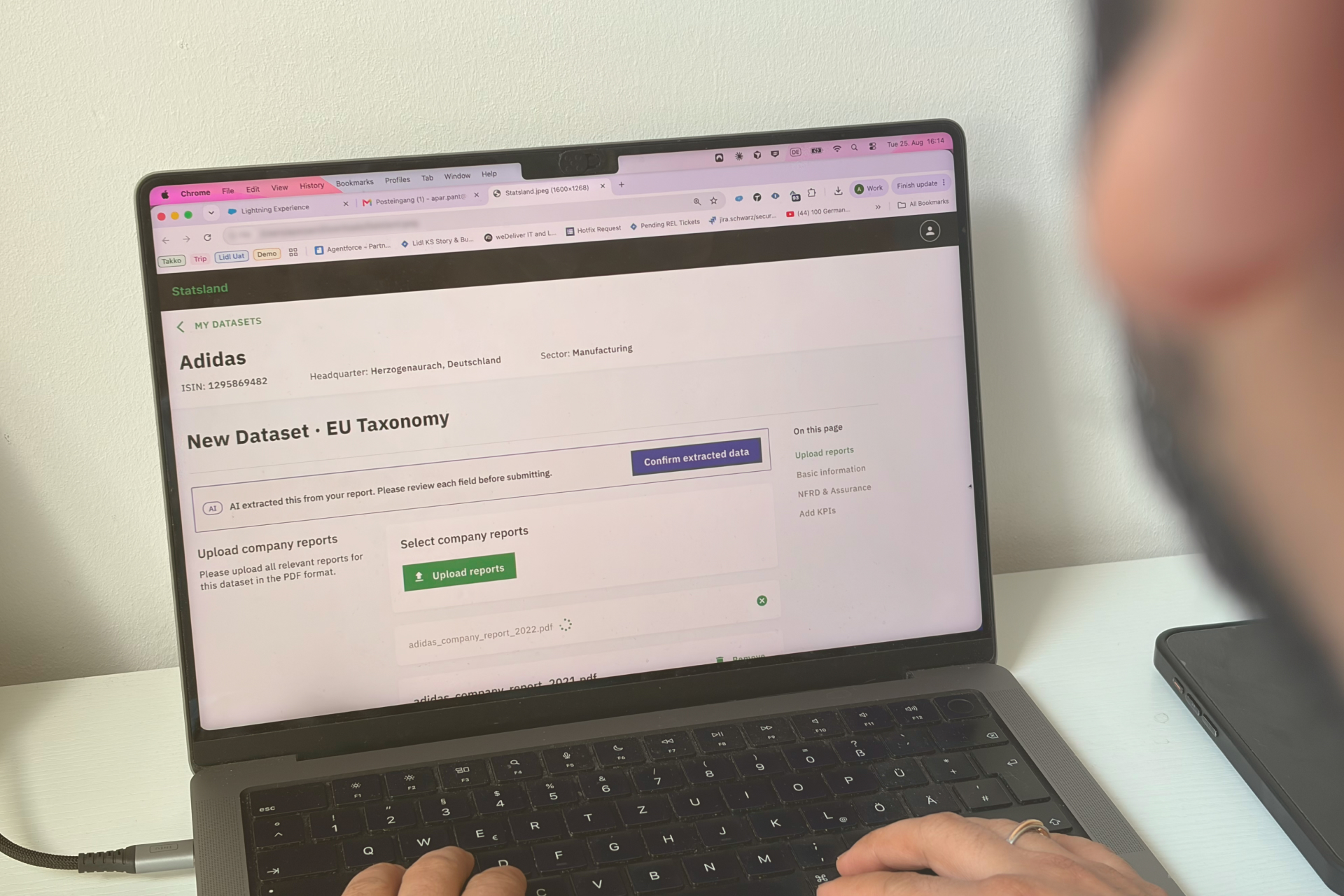
Manual entry, manual filtering. Now AI drafts, human confirms.
Project 1
Statsland AI-assisted data workflows
What I shipped
ESG data platform. On time, 20+ partners, 100+ companies, fewer errors.
How I reimagined it using AI
Manual entry, manual filtering. Now AI drafts, human confirms.
Entry point
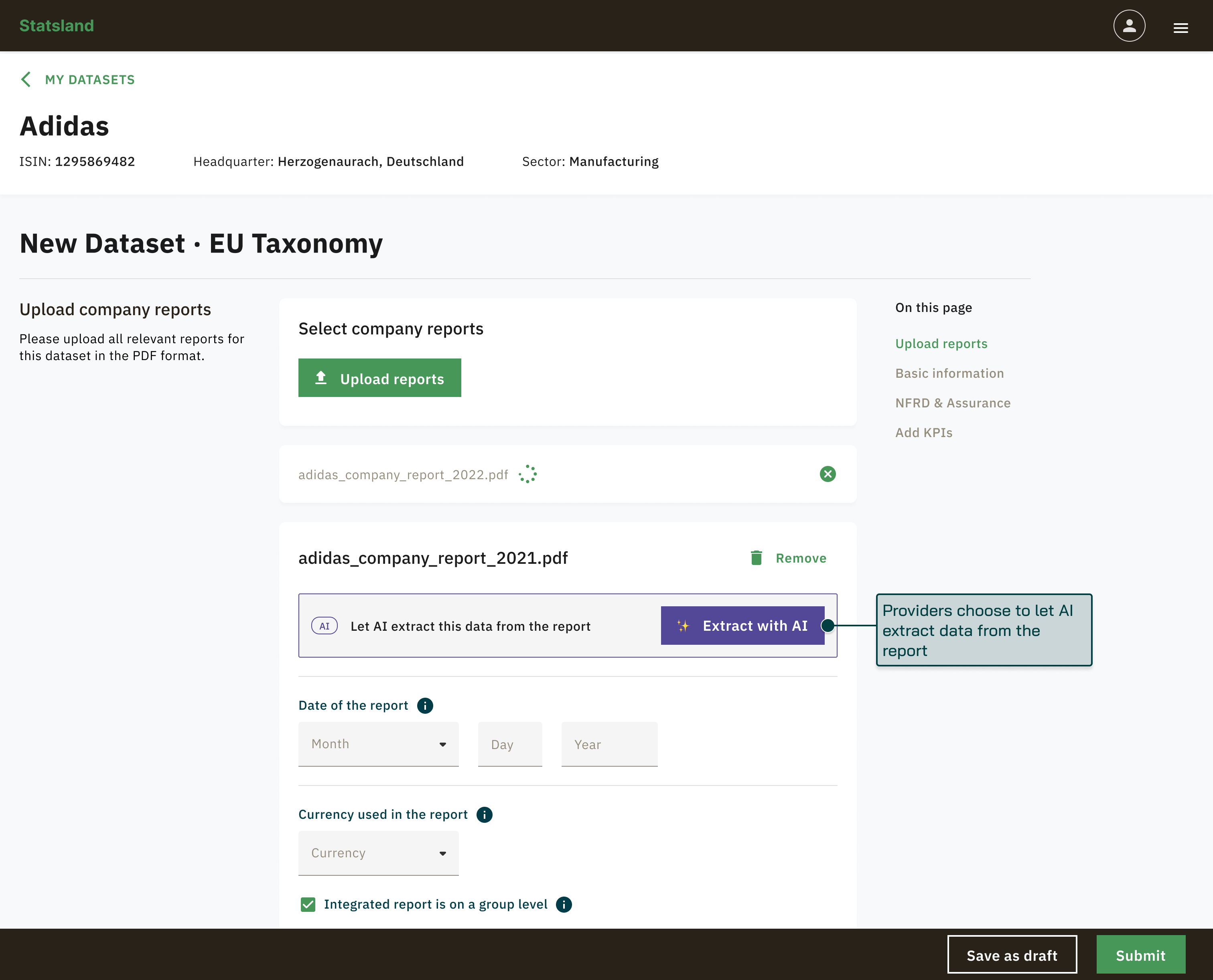
The provider decides; nothing happens without this choice.
Draft, don't decide
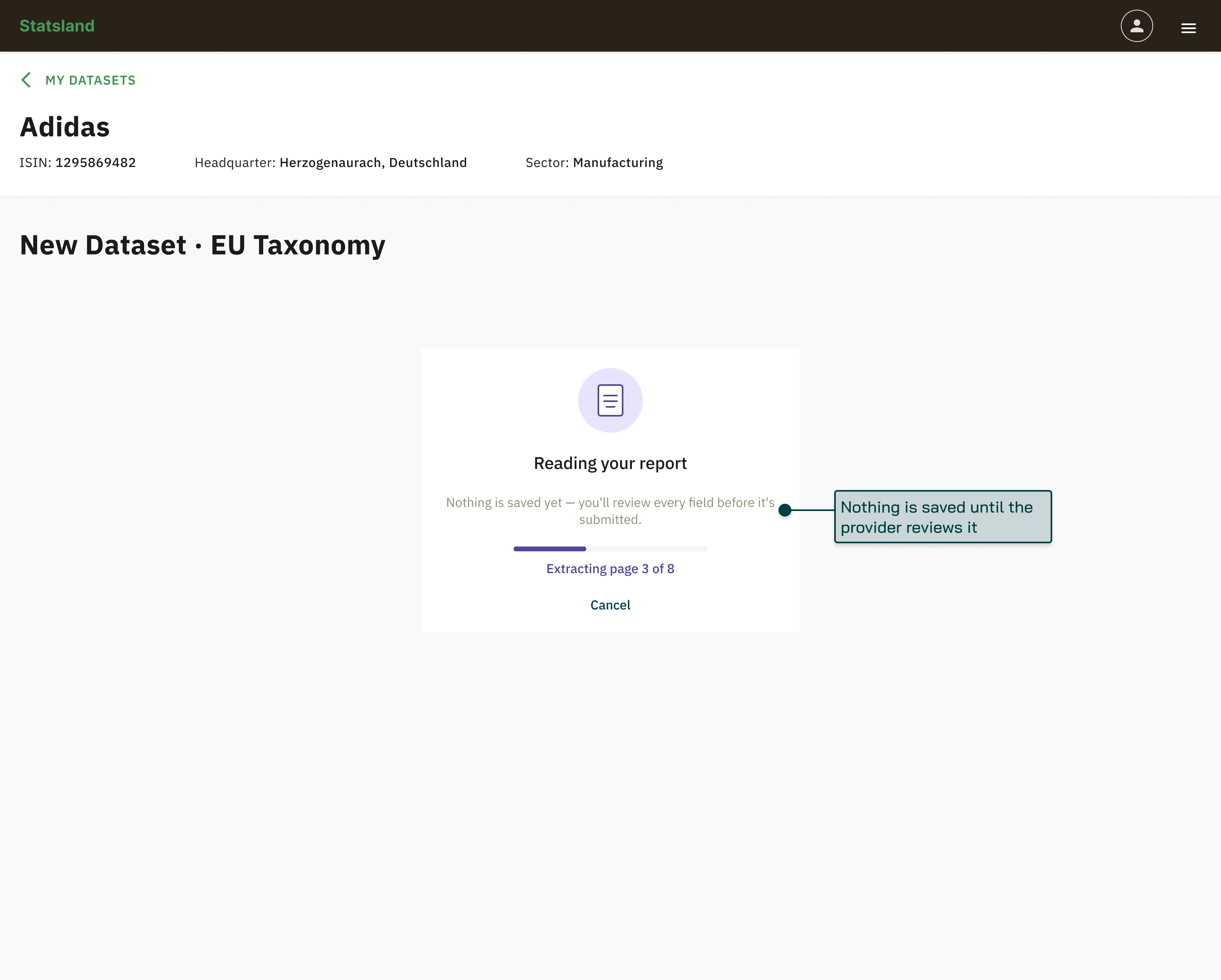
AI works alone here, but commits nothing on its own.
Show the seam during success
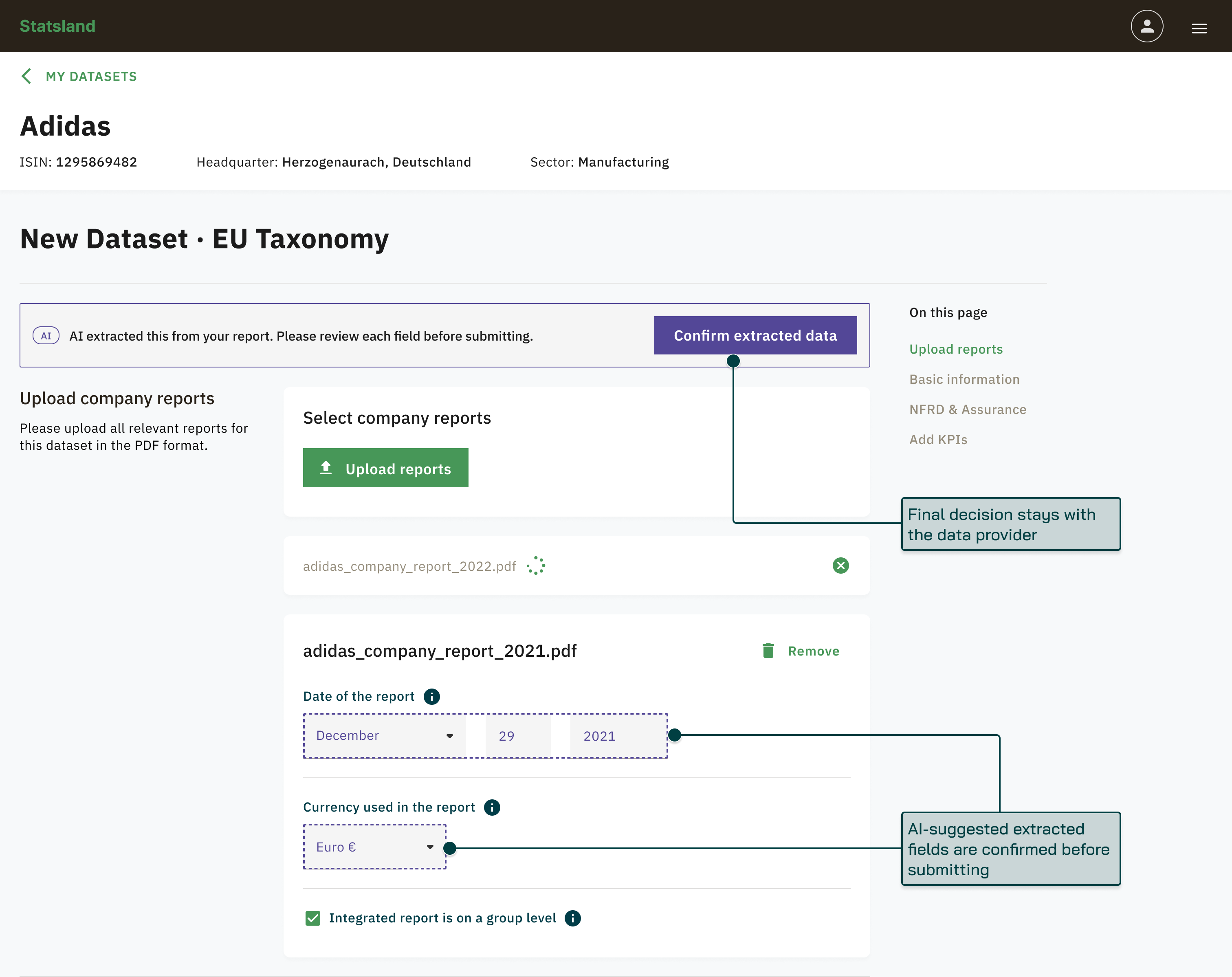
Every AI-drafted field is visibly provisional until someone says otherwise.
Fail loud, not silent, upload
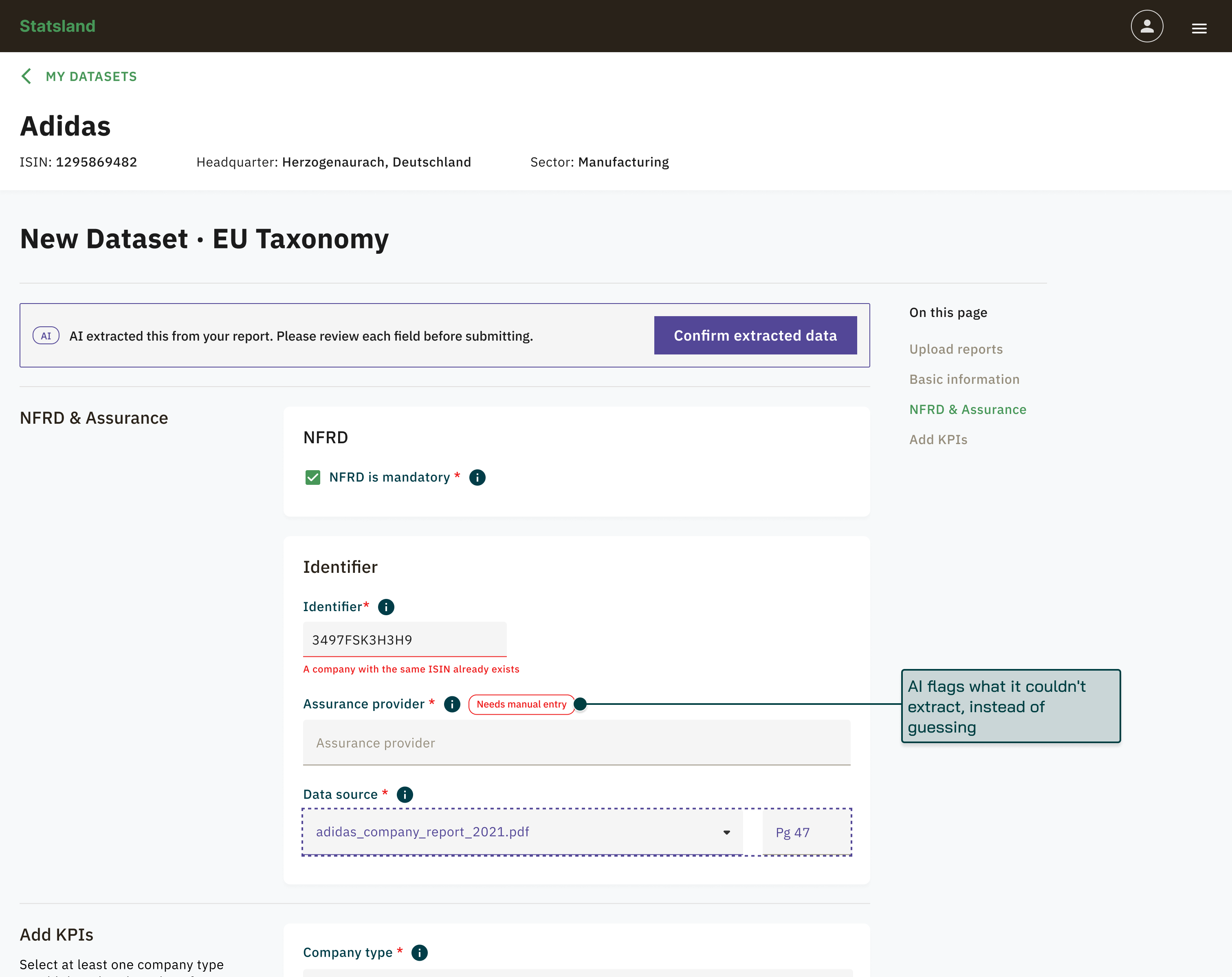
A gap AI admits to is safer than a guess it doesn't.
Show the seam, then draft, don't decide
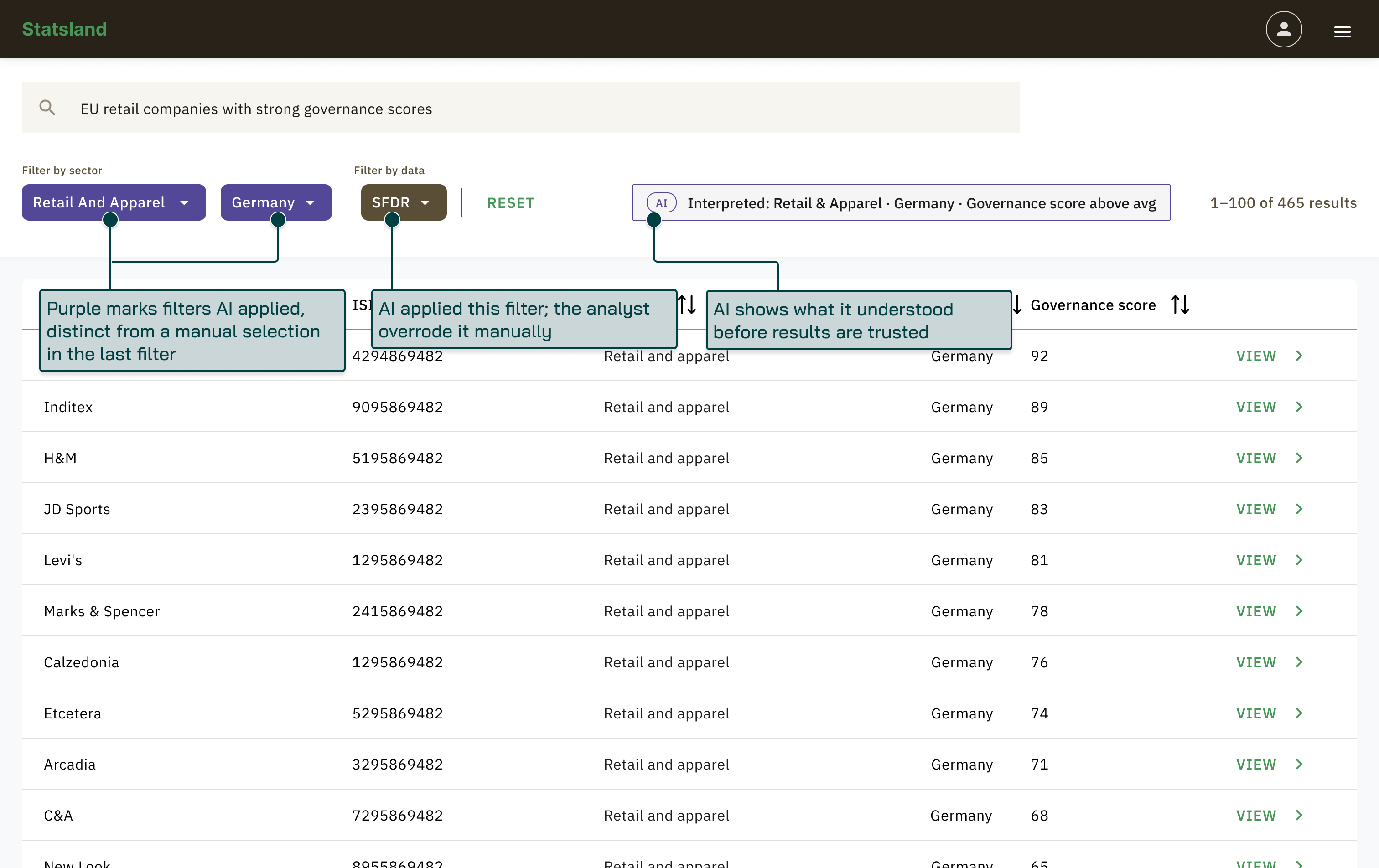
Overriding a filter manually turns it from AI-set to human-confirmed.
Fail loud, not silent, discovery
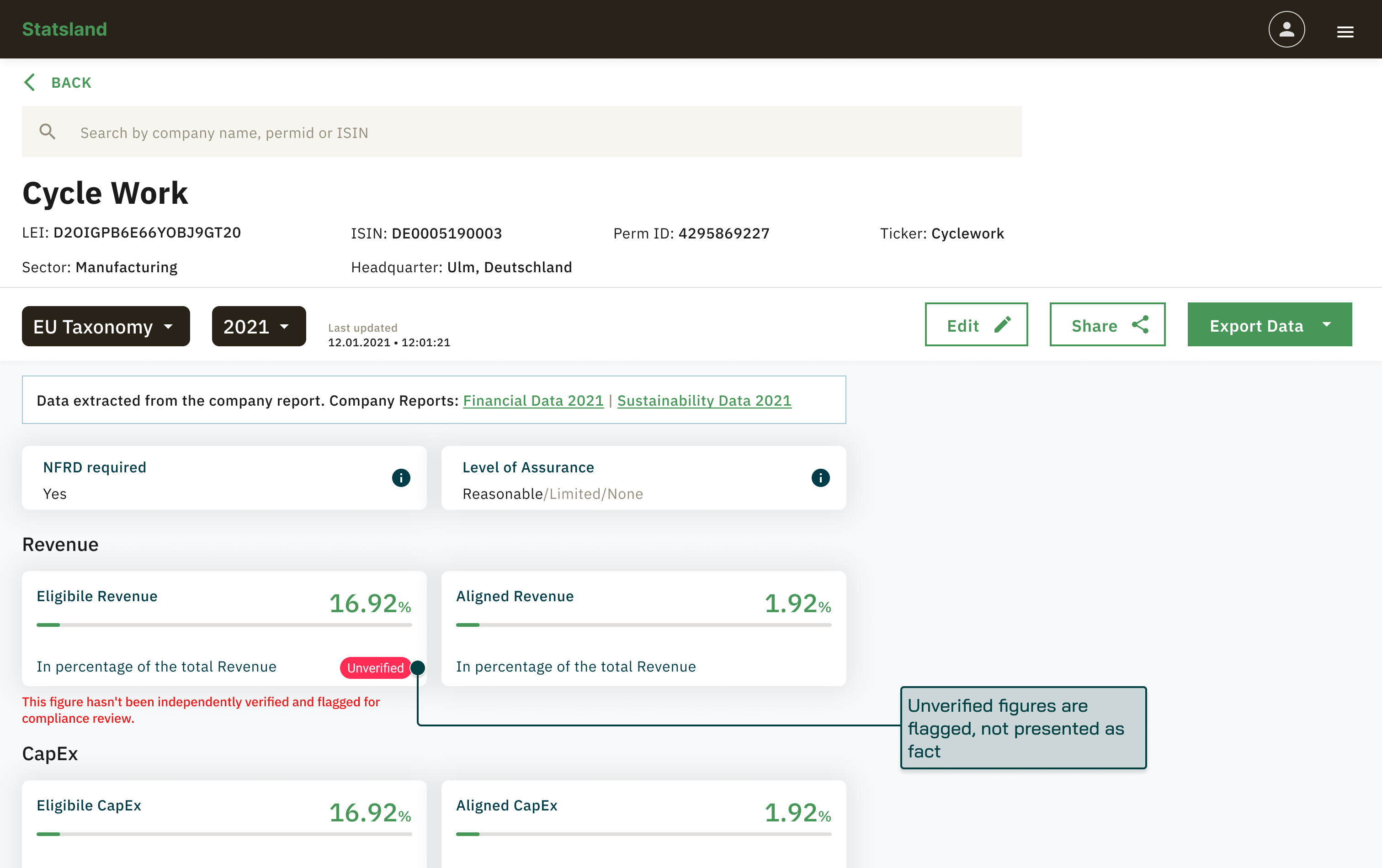
One flagged number doesn't cast doubt on the rest of the page.
Show the seam, after the fact
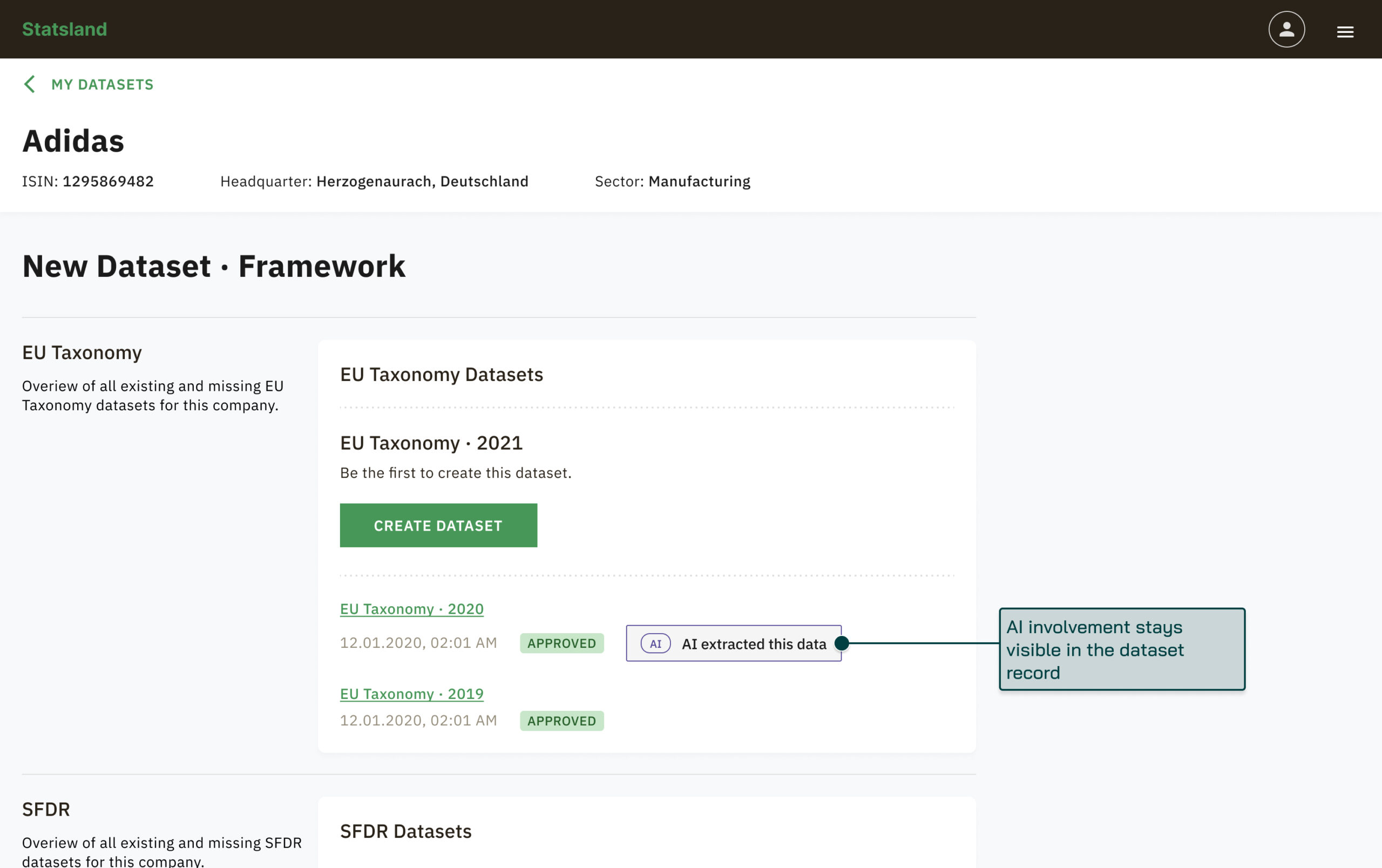
Trust is a record, not just a moment. This outlives the review itself.
Same three principles. A different domain, a different failure mode, and one new proof point: trust has to survive a human changing its mind, not just a human agreeing with it.
Project 2
Zonder AI-assisted wound assessment
What I shipped
Digital assessment tool. 1.5hrs to ~14min, 92% preferred it, 59% more throughput.
How I reimagined it using AI
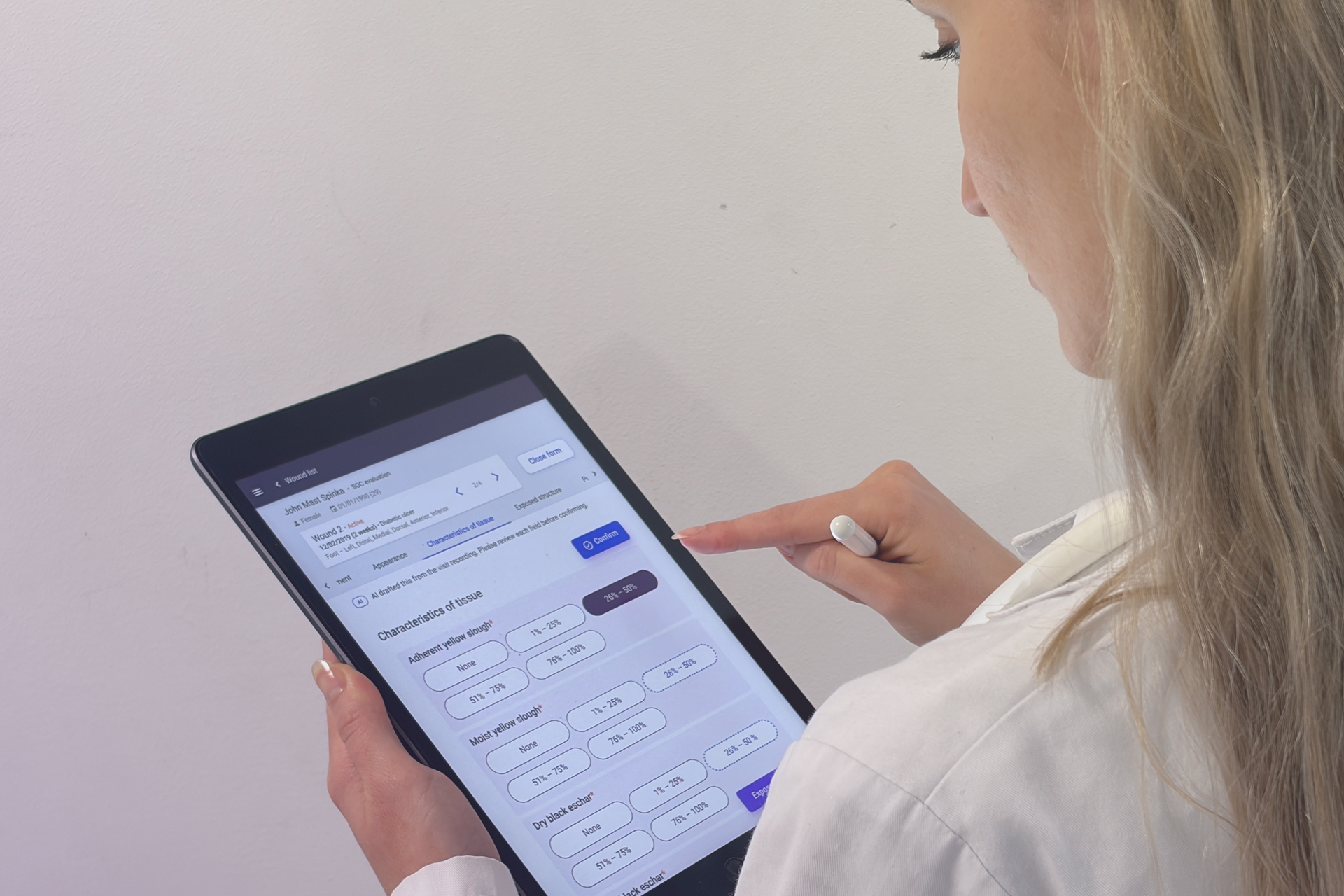
Manual documentation mid-treatment. Now AI drafts from the visit, clinician confirms.
Entry point
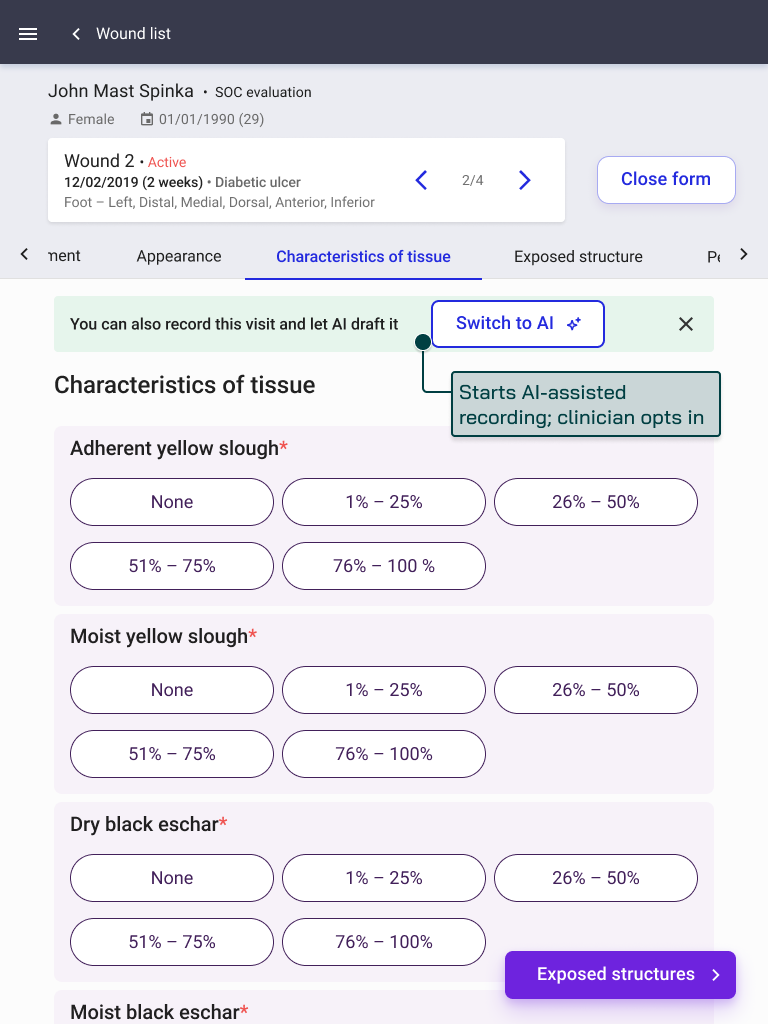
Clinicians can switch to AI-assisted recording anytime
Show the seam during success
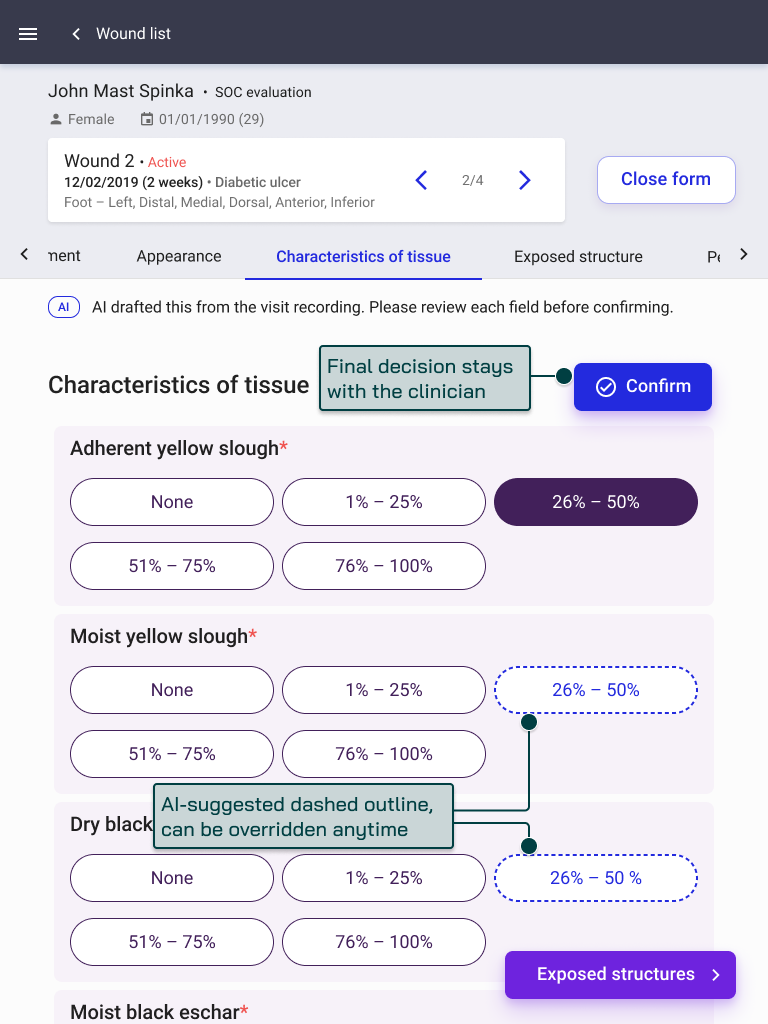
AI-suggested answers are confirmed or overridden by the clinician
Fail loud, not silent in visual interface
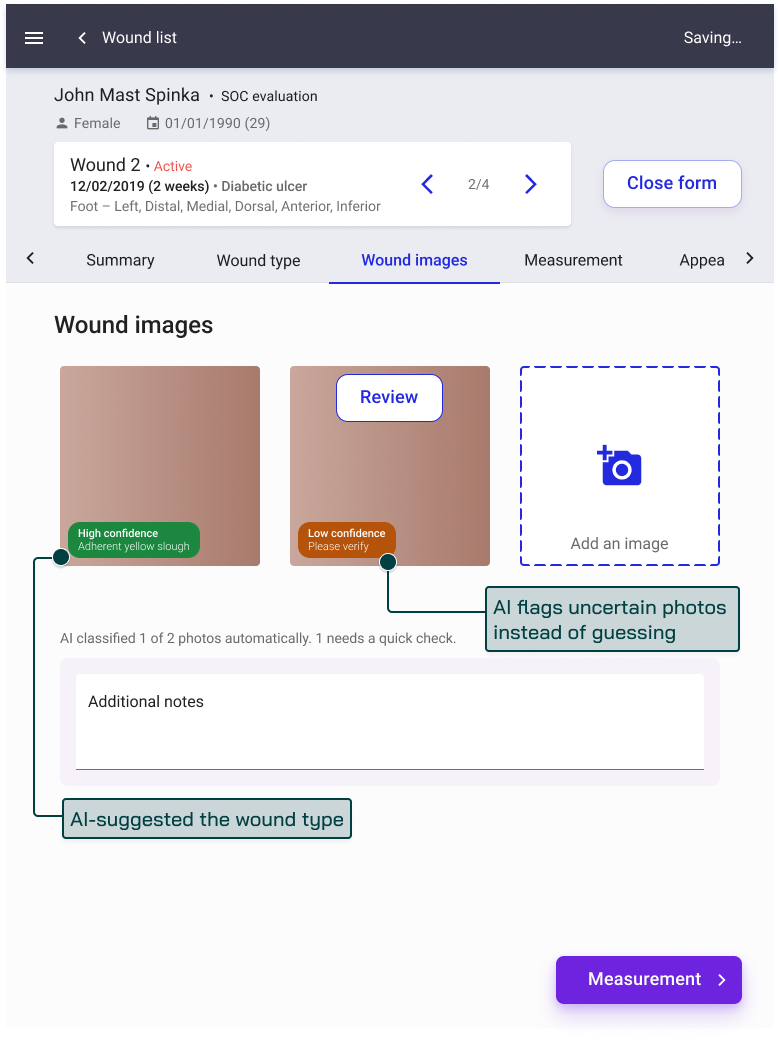
When AI isn't confident in a photo, it flags it for review instead of guessing
Draft, don't decide
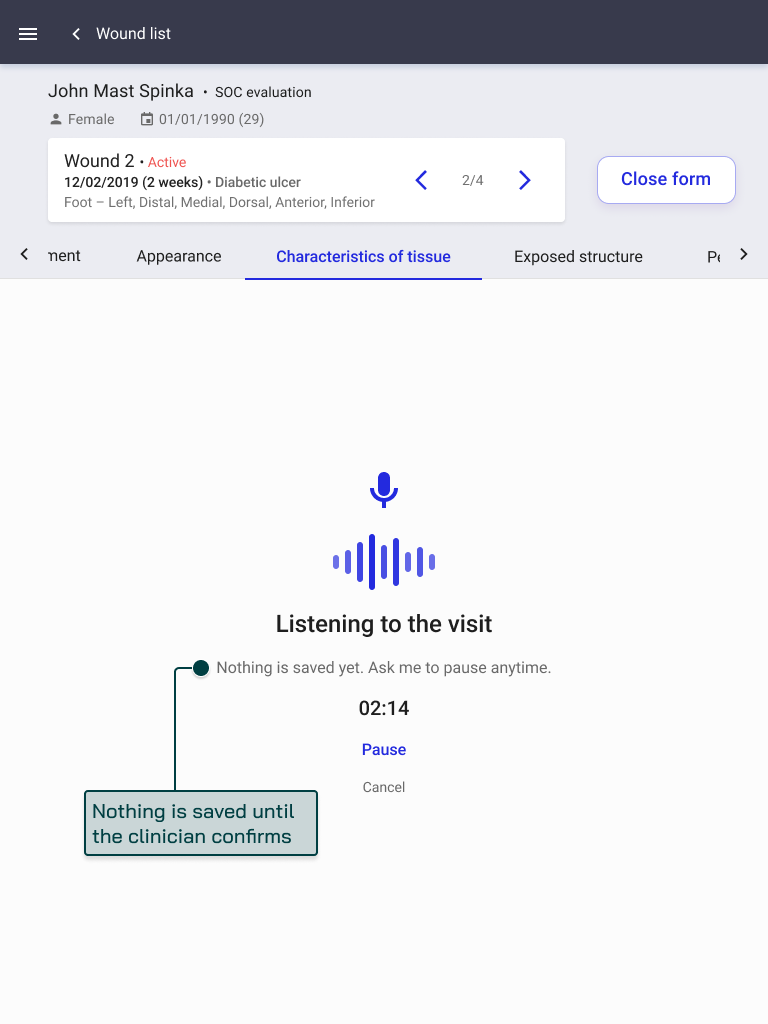
Recording is in progress & nothing is saved yet
Fail loud, not silent in voice interface
Fail loud in voice interface
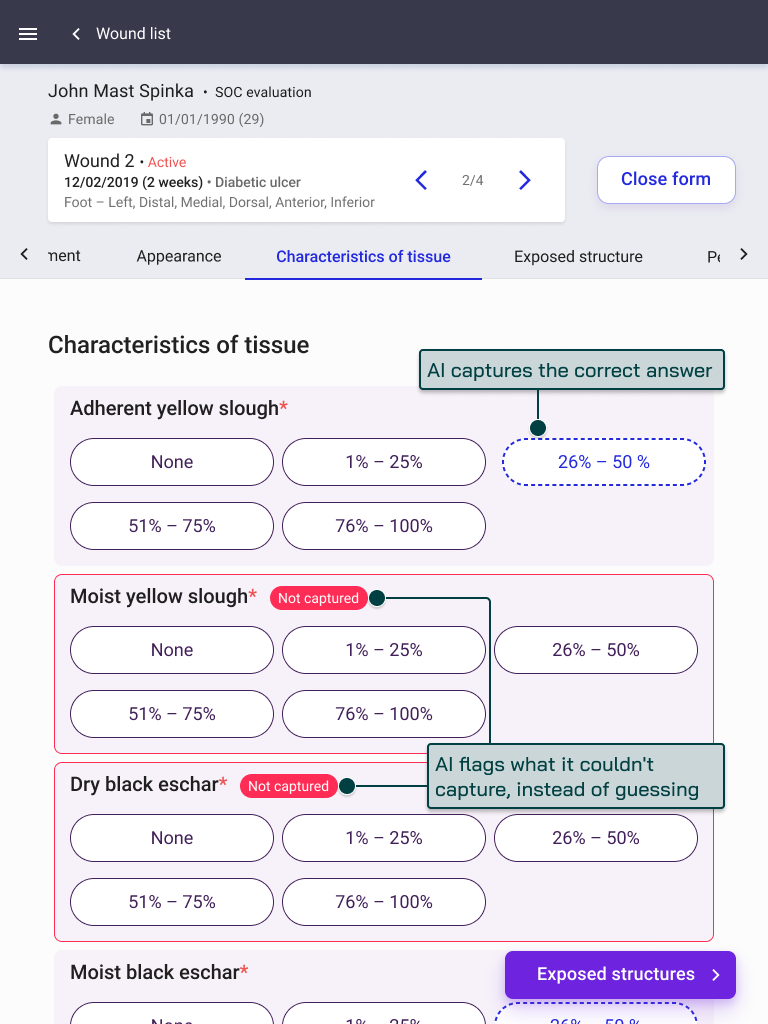
When AI can't confidently answer, it says so instead of guessing
Next steps (if I cont'd)
1st Open question: does drafting from ambient audio or an extracted report actually save time, or does reviewing and correcting AI's draft just replace typing time with editing time? That's a usability study, not an assumption, and it applies to both flows equally.
2nd open question: AI can be confidently wrong, not just honestly uncertain. Both concepts only design for the second failure mode. Where's the check for the first?